
Why You Should Use Recycled Auto Parts.
The hidden carbon offset
Every year, millions of eco-conscious consumers willingly pay extra at checkout to offset the carbon emissions of their flights. Yet, when their car breaks down, these same consumers unknowingly authorize a massive carbon expenditure in their own driveways. The blind spot? Auto repair.
Most drivers simply do not realize they can ask their mechanic to use recycled parts. Automobiles are actually the most recycled consumer products worldwide, with about 95% of end-of-life vehicles recycled in the U.S. each year. By opting for reclaimed parts rather than newly manufactured ones, consumers can dramatically reduce their carbon footprint, save money, and often get a much higher-quality component in the process.
The quality advantage.
There is a common misconception that a "recycled" auto part is a compromised, second-rate piece of scrap. The reality is quite the opposite. Recycled parts sourced from professional automotive dismantlers are genuine Original Equipment (OE) parts - the exact components engineered and installed by the vehicle's manufacturer.
When you choose a recycled part, you are getting an authentic OE component. Studies show that using original parts from a domestic supply chain carries far fewer social and environmental risks. Furthermore, opting for recycled parts allows consumers to avoid tariffs and hidden supply chain costs associated with some newly manufactured components.
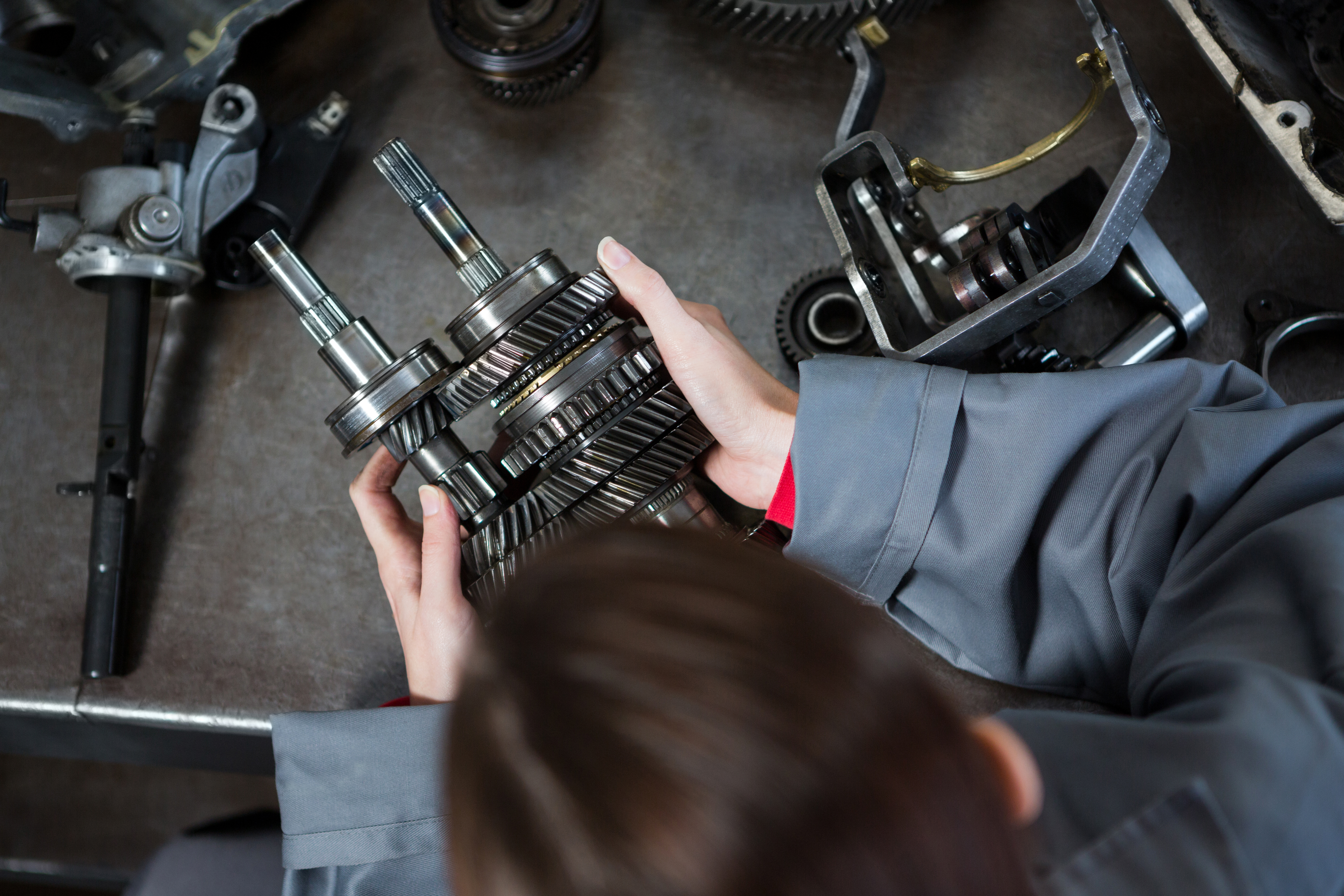
Massive carbon & energy savings.
The environmental cost of producing new car parts from virgin materials is staggering. To produce just one ton of virgin steel requires mining and processing 2,500 pounds of iron ore, 1,400 pounds of coal, and 120 pounds of limestone. This highly energy-intensive process generates massive greenhouse gas emissions.
Reclaiming and reusing functional parts from end-of-life vehicles completely bypasses this destructive manufacturing cycle. The carbon savings are monumental:

Engines &
Transmissions
Reusing a Toyota Camry engine avoids 710.82 kg of CO₂ emissions – equivalent to the carbon captured by 11 tree seedlings grown for a decade.
Building a new Camry engine consumes 1,615.49 kWh of energy.

Body
Parts
Swapping in a recycled door instead of manufacturing a new one prevents 255 kg of CO₂-equivalent emissions.

Industry-Wide
Impact
On a macro scale, the automotive recycling industry reduces greenhouse gas emissions by up to 30 million metric tons every year & saves nearly 85 million barrels of oil annually.
A compelling call to action for the automotive repair industry.
The automotive repair industry is sitting on one of the most powerful, untapped sustainability tools available today, yet it is failing to
market this advantage to the modern consumer. It is time for the industry to radically shift how it presents repair options at the counter.
Empower the consumer with data
Customers can't ask for what they don't know exists. Mechanics and repair shops should not assume customers only want "new" parts.
Instead, shops can present environmental impact information alongside pricing.
Imagine a repair quote giving the customer two options:
Option A: New Generic Aftermarket Part – $800 (Carbon Cost: +950 kg CO₂)
Option B: Recycled Genuine OE Part – $500 (Carbon Cost: 0 kg CO₂)
Given the choice, 65% of consumers will opt for remanufactured or recycled parts to cut expenses and support sustainability.
Shift the narrative from "used" to "sustainable OE"
The industry must rebrand recycled parts. Words like "junkyard" or "salvage" diminish the immense value of these components.
The industry needs to actively educate the public that these are tested, sustainable Original Equipment parts.
When consumers understand that a recycled OE fender or transmission will fit their car perfectly—unlike poorly fitting generic aftermarket
replicas—they will actively demand them.
Lead the circular economy
As the automotive world transitions toward carbon neutrality, the focus has disproportionately been on tailpipe emissions.
However, material production will soon become the dominant source of a vehicle's life-cycle emissions.
By aggressively promoting the reuse of existing parts, the repair industry can
immediately drive down material emissions without waiting for new manufacturing technologies to scale.

Bottom line.
The general public wants to make greener choices;
they just need to be shown how.
By making recycled OE parts the default recommendation,
the automotive repair industry can position itself as a
champion of the circular economy, drastically reducing
global emissions while simultaneously improving profit
margins and customer satisfaction.